How to order catering for a garden party without overcomplicating it
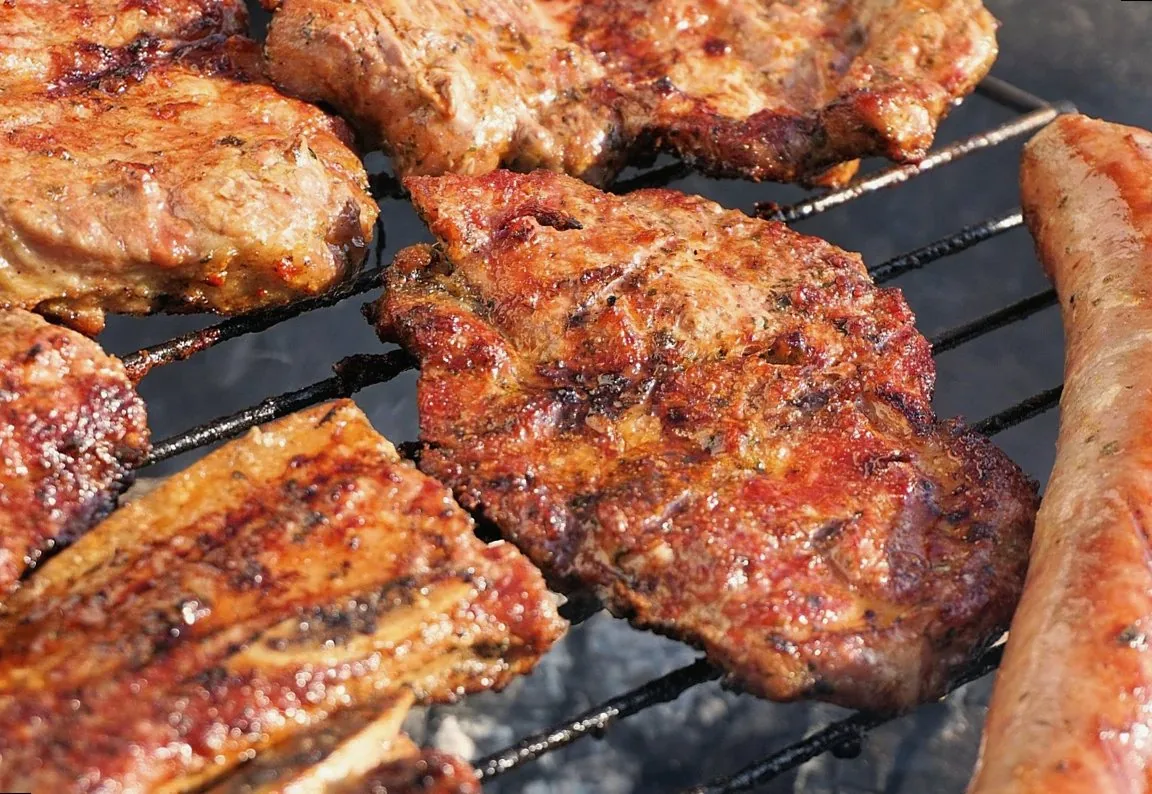
The single most common mistake hosts make when ordering catering for a garden party is not ordering too little food — it is ordering the wrong ratio of things at the wrong time, and then discovering it about forty minutes into the event. A platter of cold rice sitting in the sun while guests queue for the one dish that ran out is a very specific kind of social disaster, and it happens more than people admit. After a summer of fielding catering orders ranging from intimate gatherings of twelve to neighbourhood events pushing past eighty guests, the patterns become hard to ignore. There is a reliable gap between what hosts think they need and what actually gets eaten, and that gap has a shape. This article is an attempt to map it, and to give you the practical framework that comes out of watching those orders closely.
The quantity problem: why your headcount is only the starting point
Most people anchor their order on headcount alone — say, thirty guests, so thirty portions. That logic breaks down immediately once you factor in event duration, time of day, and what else is on the table. A two-hour lunchtime gathering is a fundamentally different eating occasion than a four-hour late-afternoon party that drifts into the evening. In the longer format, guests cycle through hunger twice: once when they arrive and the food comes out, and again around the ninety-minute mark when initial plates are cleared and the social energy picks back up. Orders for events over three hours long consistently show that hosts who planned for one round of eating run short, while those who built in a buffer of roughly 20 to 25 percent above their headcount portion count came out about right.
The composition of the group matters just as much as the number. A group that is predominantly adults in their thirties and forties at a weekend afternoon party will eat more, and more adventurously, than a mixed-age family gathering where children and older relatives are present in significant numbers. Children under twelve tend to eat about half an adult portion of the main dishes, and they cluster toward plainer options. If a quarter of your thirty guests are under twelve, your effective adult-equivalent count is closer to twenty-three, which changes the numbers meaningfully. Time of year also plays a role — summer heat suppresses appetite for heavy dishes and increases demand for lighter, higher-moisture options like salads, dips, and anything with a cooling element.
A reasonable working formula: take your confirmed headcount, subtract half-portions for guests under twelve, add 20 percent to the resulting number if the event runs longer than two and a half hours, and use that final figure as your portion target. It is not a perfect model, but it is a much more honest starting point than raw headcount.
Timing and temperature: the outdoor variables nobody plans for
Food safety outdoors operates on a different clock than food safety indoors. The general guidance in most food safety frameworks — including those used in commercial catering — is that cooked food should not sit in the temperature range between 5°C and 60°C for more than two hours. In direct summer sun, a serving dish can climb past 40°C within twenty minutes of being set out. That does not mean the food is immediately unsafe, but it does mean the window is shorter than hosts expect, and the two-hour clock starts from the moment the food leaves temperature-controlled packaging, not from when guests start eating.
The practical implication is that delivery timing needs to be planned backwards from when guests will actually eat, not from when they arrive. If guests arrive at 1 pm and typically take thirty to forty minutes to settle, pour drinks, and make their way to the food, a delivery at 12:45 pm means the food has been out for over an hour before the first plate is filled. For a summer garden party, requesting delivery no more than twenty to thirty minutes before you intend to serve gives you the most useful window. Communicate that window clearly when you place the order — most catering operations can work to a specific serve-by time if they know it in advance.
One underrated solution is staggered serving. Rather than putting everything out at once, keep half the food in its insulated packaging and bring it out thirty to forty-five minutes into the event, once the first round is underway. Guests perceive a fresh replenishment as abundance even if the total quantity is identical to what a single spread would have been. It also extends your safe-serving window by a full rotation.
The two-hour outdoor clock starts when the lid comes off, not when the first guest fills a plate.
Packaging, layout, and the practical recap
Garden parties create a specific packaging challenge that indoor events do not have to the same degree: there are usually no flat, stable surfaces in abundance. Trestle tables help, but guests often drift away from them, eating while standing or sitting on garden furniture that was not designed for balancing a plate. Packaging that works well for collection or indoor delivery — large foil trays with cardboard lids, for instance — can be genuinely difficult to serve from outdoors, where wind, uneven ground, and a lack of nearby surfaces make lifting a heavy tray to spoon from it an awkward operation.
When you specify your order, it is worth asking explicitly about serving-friendly formats. Shallower, wider trays are easier to access than deep containers. Dishes that can be served with tongs rather than ladles are faster and spill less. Sauces and dressings in separate sealed containers, rather than pre-poured over the main dish, travel better and give guests more control — which matters more outdoors where there is no counter to rest things on. Individual or near-individual portions, even if slightly more expensive per head, reduce the logistical load on the host considerably and eliminate the communal-serving bottleneck entirely.
- Confirm your adjusted headcount (half-portions for under-12s, plus 20 percent buffer for events over 2.5 hours) before placing the order.
- Request a specific delivery window timed so food arrives 20 to 30 minutes before you plan to serve, and communicate that window to your caterer.
- Plan to stagger serving: keep a portion of the food sealed and bring it out 30 to 45 minutes into the event.
- Ask for shallow, wide serving trays and tong-friendly dishes when specifying your order.
- Keep sauces and dressings separate and in sealed containers for outdoor service.
- Set a phone reminder for the 90-minute mark to check what is running low and bring out any held-back portions.
Garden catering goes wrong in predictable ways, and most of those ways trace back to decisions made at the planning stage rather than on the day. Getting the quantity formula right, pinning down a realistic delivery time, and thinking through how the packaging will actually function in your garden removes the majority of the risk before a single dish leaves the kitchen. The food part, at that point, is the easy part.