Braised beef shin: why the cut matters and what four hours actually does
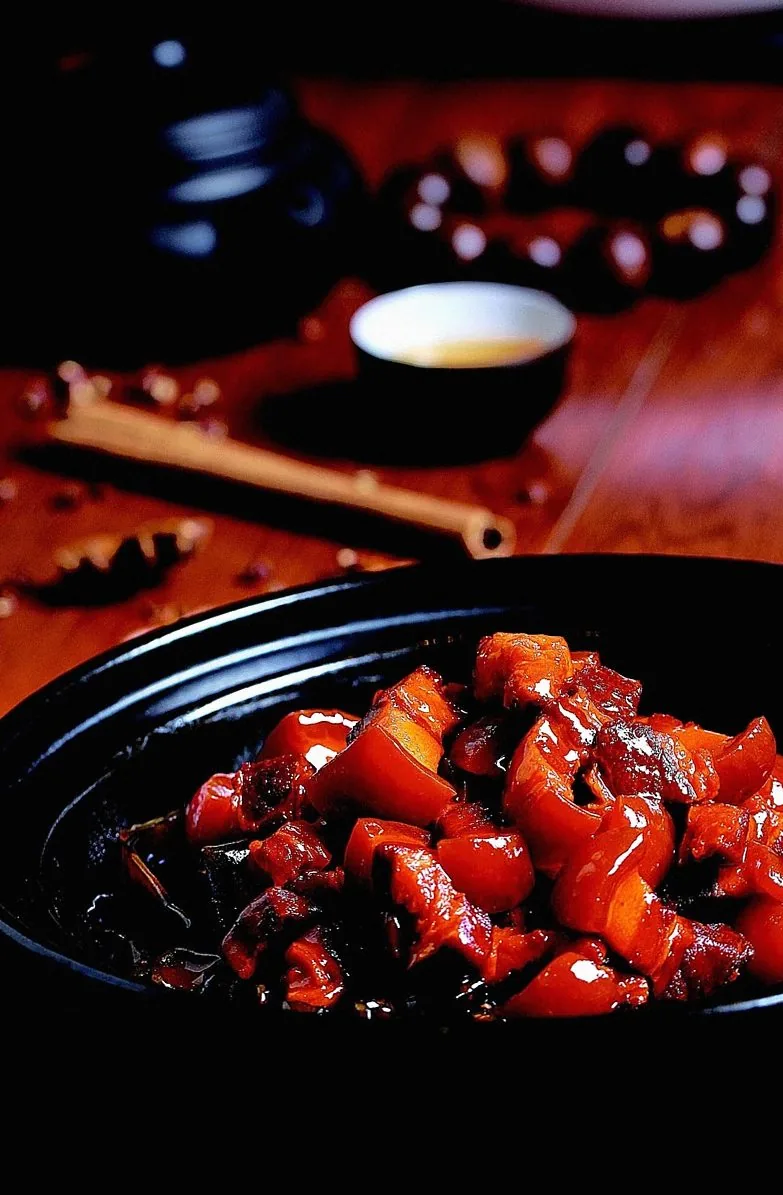
Walk into any decent butcher in the country on a cold Tuesday morning and the shin will be sitting there, usually the cheapest thing behind the glass, often ignored in favour of brisket or short rib. That neglect is doing a lot of quiet harm to a lot of weeknight dinners. Beef shin is not merely a budget-friendly alternative to more glamorous cuts — it is, structurally, the cut most precisely suited to long, low, wet cooking. Understanding why means getting into the anatomy of a working muscle, the chemistry of collagen, and the surprisingly underrated question of what happens to the liquid left in the pot once the meat comes out. The short answer is that the braising liquor is not a byproduct; it is the product. The longer answer takes four hours and a Dutch oven.
Why the shin and not the shoulder: a working muscle has a different architecture
The shin — the lower foreleg of the animal — is one of the most heavily worked muscles on the beast. A cow spends its life on its feet, and that constant load-bearing means the shin accumulates a high proportion of connective tissue, specifically collagen, woven through and around the muscle fibres themselves. Food scientists who have measured the collagen content of different beef cuts typically find shin running at roughly two to three times the collagen density of a cut like sirloin. That structural difference is not incidental — it is the entire reason the cut behaves the way it does in a braise.
A leaner, less worked cut — topside, say, or silverside — will dry out and become grainy during a four-hour cook because there is not enough intramuscular fat or connective tissue to compensate for the moisture being driven out of the muscle fibres as they contract. Shin, by contrast, has so much collagen threaded through it that the cook is essentially in a race between fibre tightening and collagen dissolving, and if you manage the temperature correctly, the dissolution wins. The result is meat that pulls apart under gentle pressure rather than crumbling to dry shreds. The bone, present in osso buco-style cross-cut slices, contributes additional gelatin from the marrow cavity and periosteum — the thin membrane around the bone — which migrates into the surrounding liquid.
The four-hour question: what is actually happening between the first hour and the last
Collagen is a protein, and like all proteins it denatures when heated — but it does so much more slowly than the myosin and actin that make up the bulk of the muscle fibre. Myosin begins to set at around 50°C; actin tightens more aggressively above 65°C. Both of these processes happen in the first 45 minutes of a braise held at a gentle 150°C oven temperature, which is why shin can feel disappointingly tough when you check it at the one-hour mark. The collagen conversion to gelatin — a process called hydrolysis — requires sustained heat over time. At braising temperatures, collagen molecules gradually break apart their triple-helix structure and dissolve into the surrounding liquid. This takes hours, not minutes.
The transition you are waiting for — the point where the meat stops resisting and starts yielding — typically happens somewhere between the two-and-a-half and three-hour mark for a piece of shin around 300 to 400 grams. After that, continuing the cook does not ruin the meat; it simply completes the process more thoroughly, softening the last stubborn pockets of connective tissue. A four-hour window is not arbitrary — it is wide enough to accommodate variation in the age of the animal, the size of the cut, and the actual versus dial temperature of any given oven.
The liquid in the pot is doing something equally significant during all of this. As gelatin dissolves out of the meat and bone, it accumulates in the braising liquor, increasing its viscosity. A liquor that started as thin, wine-coloured stock will, by hour four, coat the back of a spoon and cling to the meat when served. This is the physical basis of why a good braise looks glossy on the plate: you are seeing suspended gelatin catching the light.
The transition you are waiting for happens somewhere between two-and-a-half and three hours — and after that, continuing the cook is not a risk, it is a completion.
The braising liquor: why pouring it away is the most expensive mistake in the pot
Once the shin is rested and portioned, the liquid left behind is a concentrated, gelatin-rich stock that has absorbed fat-soluble flavour compounds from the aromatics, wine or beer used in the braise, and the meat itself. Its gelatin content means it will set to a soft jelly once cooled — which is a practical test of whether your braise achieved what it was supposed to. If the cooled liquid stays entirely liquid, the collagen conversion was incomplete, and that is useful diagnostic information for next time.
That jellied liquor has several practical futures. Reduced by a third over a medium heat, it becomes a sauce with enough body to need no thickener. Strained and frozen in small portions, it functions as an instant flavour base for soups, braises, or pan sauces for the following weeks. Used to reheat leftover shin the next day, it rehydrates the meat far more effectively than any amount of added water could, because the gelatin acts as a kind of molecular sponge, holding moisture against the muscle fibres as the temperature rises.
Braised beef shin rewards patience more reliably than almost any other technique in a cold-weather kitchen, and most of the work happens without intervention once the lid goes on. If you have questions about how we prepare ours, or want to know what goes into the braising liquor we use, get in touch.